
Internet is one thing that has changed human lives completely.
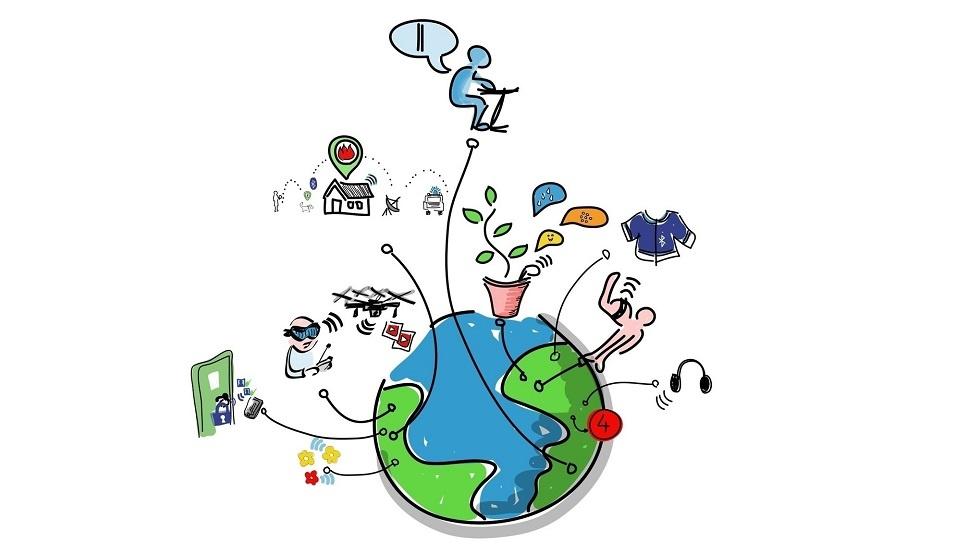
We have known Internet to enable us connect with other people and share multimedia and information. Now, Internet has evolved to connect with other physical devices as well. IoT enables devices other than standard products, such as smartphones and computers to connect with each other. Generally, the ‘things’ can be addressed uniquely, using a uniform resource identifier or an IP address. The objects can transmit data to each other and even perform physical acts using sensors.
The term was coined in 1999 by Kevin Ashton while working at P&G, he explains, “IoT is a network of physical objects that are connected to the internet. These objects such as sensors, smartphones, watches and electronics will transmit data via “The Internet” to the cloud providing a “smarter” service or experience for the user. This is what we mean by “smart technology.”
In a post by Huffington it is stated that, “The Internet of Things (IoT) will soon be called the Internet of Everything (IoE). By the year 2020, it is predicted that more than 50 billion connected devices will be on the Internet. If Facebook has its wish of connecting the other two-thirds of the world, this number could be predictably higher.”
We already know that technology and the Internet have been deeply rooted in the education sector. Thus, it won’t take much long for this innovative tech to get a grip in the industry. In fact, some of the organizations have already started making good use of it. The Business Insider gives some examples of the technology being used in the education industry.
It states:
“The foremost example of a tech company that has invaded schools is SMART, which pioneered the world’s first interactive whiteboard in 1991. SMART boards changed the way teachers and students interacted in the classroom by moving lessons away from the dusty chalkboards that dominated education for decades.
But SMART is far from the only company sinking its hooks into the U.S. school system. IPEVO has also manufactured a wireless interactive whiteboard that serves as an alternative to the SMART board.
Ideapaint, which creates dry-erase whiteboard paint, dove headlong into the IoT by developing an app called Bounce with the goal of bringing more of the educational experience online.
And IBM has announced that it would invest $3 billion into the IoT over the next few years, and a significant portion of that money will go toward education.”
IoT influences education in many ways. It is this asset intelligence that enables institutions to make more informed decisions in an effort to improve student learning experiences, operational efficiency and campus security. It is this asset intelligence that enables institutions to make more informed decisions in an effort to improve student learning experiences, operational efficiency and campus security and many more.
The pointers below will give you a brief on the same.
– Information provided by IoT empowers educators to deliver improved education. They have a window into the success of their strategies, their students’ perspective, and other aspects of their performance. IoT relieves them of administrative and management duties, so they can focus on their mission. It automates manual and clerical labor, and facilitates supervising through features like system flags or controls to ensure students remain engaged.
– Educational institutions are comprised of many moving parts. In order to succeed at what they do, they must be able to keep track of students. This can be done by leveraging the power of IoT that can easily keep track of people, assets and activities. The technology enables the educational institutes to track ID cards and wristbands storing the last-known location of a student or visitor, helping to ensure the right people are accessing the right areas on campus. Tracking devices can ensure that students are accounted for in real time, minimizing time-consuming activities like recording attendance. With RFID (Radio Frequency Identification) equipped backpacks, students can be automatically checked in as they board the bus. Similarly, the proliferation of smart ID cards and wristbands means students can be automatically marked “present” when they walk through the classroom door.
One example is of a school in Richmond, California that embeds RFID chips in ID cards to track the presence of students. Even if students are not present for check-in, the system will track and log their presence on campus.
– The IoT’s ability to track objects, students and staff, and to connect devices across campus brings a new level of safety to institutions. A GPS-enabled bus system means that bus routes can be tracked, so that parents and administrators can know where a given bus is at any given time. In addition to making the school journey safer for students (and a lot less stressful for parents), students can be notified when the bus is near their pickup location; no more waiting outside for a late bus.
– IoT facilitates the customization of education to give every student access to what they need. Each student can control their experience and participate in instructional design, and much of this happens passively. The student simply utilizes the system, and performance data primarily shapes their design. This combined with organizational and educator optimization delivers highly effective education while reducing costs.
Additional Resources:
5 Ways The Internet Of Things Is Changing The Game For Education And Learning
3 Ways Colleges Are Utilizing the Internet of Things
How IoT Is Transforming The Education Sector
The Internet of Things for Educators and Learners
17 ‘Internet Of Things’ Facts Everyone Should Read
Foreseeing the tremendous potential it has and the limitless opportunities it will bring, IoT is going to be one face changing mark in the coming times for the education industry. Share your take on the same. Mention in the comment section below.