This website stores cookies on your computer. These cookies are used to improve your website experience and provide more personalized services to you, both on this website and through other media.
Accept
EdTechReviewEdTechReview
  • News
  • Trends
  • Insight
  • eLearning
  • Research
  • Dictionary
  • EdTech Voices
  • More
    • Data & Statistics
    • Reviews
    • AWS for Education
    • Events

    Resources

    • Infographics
    • Reports & Case Studies
    • Videos
    • Books
    • Webinar

    Needs

    • 1:1 Learning
    • 21st Century Education
    • 21st Century Leadership
    • 21st Century Learning
    • 21st Century Teaching
    • 3D Printing
    • More Tags

    For

    • Students
    • Teachers/Educators
    • Administrators
    • Entrepreneurs/Startups
    • Govt. Officials/Policymakers
    • Parents
Explore
Search
Contribute
  • Submit A Post
  • EdTech Trainers and Consultants
  • Your Campus EdTech
  • Your EdTech Product
  • Your Feedback
  • Your Love for Us
  • EdTech Product Reviews
ETR Resources
  • About
  • Mission/Vision
  • Team
  • Services
  • Testimonials
  • Authors
  • Sponsor
  • Partner
  • Advertise
  • Our Clients
  • Media Kit
  • Press Release
  • FAQ’S
Reading: Why Adoption of Experiential Learning is Growing + Some Examples from India
Aa
EdTechReviewEdTechReview
Aa
Search
  • News
  • Trends
  • Insight
  • eLearning
  • Reviews
  • Dictionary
  • EdTech Voices
  • Data & Statistics
  • Research
  • AWS for Education
  • Events
  • EdTech Voices
  • Tags
  • About
  • FAQ’S
  • Our Clients
  • Partner
Follow US
Home > Trend & Insight > Trends > Why Adoption of Experiential Learning is Growing + Some Examples from India
Trends

Why Adoption of Experiential Learning is Growing + Some Examples from India

Dr. Pavan Soni
Dr. Pavan Soni Published Nov 13, 2016
Share
6 Min Read
Why Adoption of Experiential Learning is Growing + Some Examples
SHARE

How do we learn a new concept?

AdvertisementWhy this Ad?

By reading, by observing, and, most importantly, by practicing, and in the process, committing a few mistakes. Whether it was the first time you rode a bicycle or attempted making a new dish, or merely hitting the car on the road. All these were ‘experiences’, good or bad, that took you an inch closer to learning and then mastering a new concept. Only by engaging your various senses, such as hearing, seeing, feeling, smelling, and even tasting, that you came close to the reality of what it’s like to perform something important.

The aforementioned concept is known as ‘experiential learning’. This article engages in highlighting the growing adoption of experiential learning across various stages of one’s learning trajectory, from kindergartens, all the way to corporate coaching. Having been part of such programs myself and conducting several of those, across levels, I do understand that some of the best-designed programs have a high degree of experiential learning component. Let’s discuss more.

Research suggests that one’s mind processes incoming information from its various sources, maps it to the extant repository or concepts, and then stores the information in the most parsimonious manner. Now, those who have above average memory power, or the ability to think in an associative manner, have indeed managed to create denser and highly active neural networks. This incoming information is quickly and seamlessly connected to the existing network, and with time, such networks grow and it becomes increasingly convenient to locate a spec through its multiple pathways.

With an enhanced stimulus, such as that from multiple sources, touch, see, smell, taste, et cetera, the various sections of the brain get lit-up. Not only that a wider cross-section of the brain is then put into use, but also the networks are now highly redundant, and hence it is now easy to retrieve information. That’s what aids learning.

There are science labs in schools, workshops in engineering colleges, case studies in management education, and role plays in executive coaching. All these are yet more sophisticated forms of experiential learning. Here students learn from a situation, with each other, and by engaging multiple of their intellectual faculties.

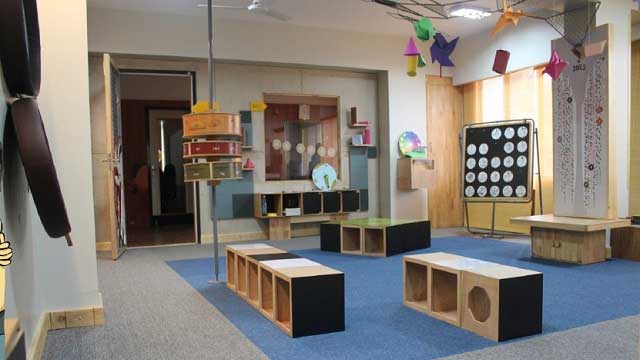
Let me share an example of an educational setup which I am engaged with for quite some time. BRAINSTARS, an educational startup that engages with Grade one to eight education in science and mathematics by adopting highly creative methods. For instance, through one of their products “NumberNagar”, the team offers learning spaces for students and teachers alike on elementary and even complex concepts in trigonometry, mensuration, algebra, geometry and other maths-related nuances.

Learning space for NumberNagar

At the startup, there are over 20 mathematics labs engaged in various levels of sophistication, dotted across India, and two independent learning spaces where students, teachers and parents can engage in hands-on learning and have fun with mathematics. On similar lines, BRAINSTARS also has labs for science and social sciences, in attempting to shape our students as holistic learners and explorers.

In another context of experiential learning, let’s look at one of India’s oldest and largest Industrial Training Institute (ITI) located in Bangalore. With over 23 trades, the six decades old ITI is identified as a role model institute in India, and in equal measures remains a key centre of attraction for students and corporate alike. My recent visit to the institute, located near Dairy Circle in Bangalore was a revelation on how kids in their late teens are made into expert tradesmen in disciplines such as electrical circuits, welding, automation, refrigeration and air conditioning, etc. All this comes from experiential learning, where students spend almost four hours a day doing practical in labs and getting their hands dirty. 

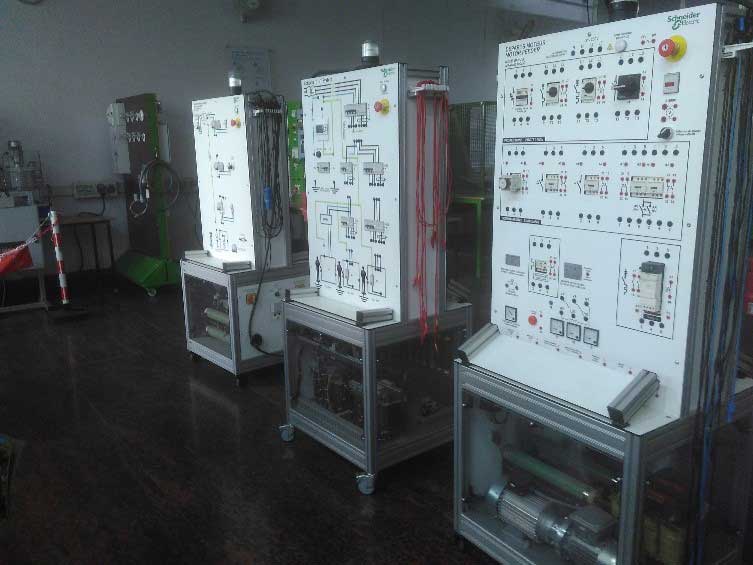
Take for instance the state-of-the-art Institute of Electricity and Energy Management setup with generous sponsorship from Schneider Electric. The labs are meant not only to train the students but also teachers from the incumbent ITI and others in the city. I saw teachers and trainers engaged in animated discussions and exercises in understanding the elementary concepts of electrical circuit designs and power systems. For me, the lab was far better than what I have experienced at several Engineering Colleges across India. Perhaps, that’s what differentiates skills and knowledge, and experiential learning, converges knowledge to generate skills.
experiential-learning-india

Teachers getting hands-on learning on elementary electrical concepts.  

experiential-learning-india-examples

The bigger task for the entire Indian education system remains to engage our students in a manner that enriches learning experience and is impactful at the same time. Experiential learning has shown to offer a lead in this direction, and with the advent of learning spaces, now,  teachers and students alike can literally try their hands on new concepts. 

TAGGED: 21st Century Learning, 21st Century Teaching, Engagement, Experiential Learning, Teachers/Educators, Trends
Share This Article
Facebook Twitter Whatsapp Whatsapp LinkedIn Reddit Telegram Email Copy Link
Previous Article Why Students Matter & What Young Teachers Must Know About Education in Difficult Communities Why Students Matter & What Young Teachers Must Know About Education in Difficult Communities
Next Article Automated RFID Based Student Tracking & Attendance System for Schools Automated RFID Based Student Tracking & Attendance System for Schools
AdvertisementWhy this Ad?

Latest EdTech News To Your Inbox

Stay Connected

AdvertisementWhy this Ad?

Latest EdTech News To Your Inbox

Stay Connected

AdvertisementWhy this Ad?

You Might Also Like

Mindgroom interface to find a career counsellor near me by location
Trends

Career Counselling Near Me – An Interface Recently Launched by Mindgroom for Face-to-Face Career Guidance

Jun 10, 2026
How AI Tools Are Changing the Way We Work Learn and Create
Trends

How AI Tools Are Changing the Way We Work, Learn, and Create

Jun 9, 2026
AI Voice Agents for EdTech Making Learning More Interactive and Accessible
Trends

AI Voice Agents for EdTech: Making Learning More Interactive and Accessible

Mar 31, 2026
From Manual Salaries to Smart Systems The Evolution of Payroll in Schools and Universities
Trends

From Manual Salaries to Smart Systems: The Evolution of Payroll in Schools and Universities

Mar 19, 2026
Why AI Grading Tools Are Changing the Game for K-12 Teachers
Reviews

Why AI Grading Tools Are Changing the Game for K-12 Teachers

Mar 11, 2026
Why Hands-On Training Is An Essential Part Of Your Technology Skills Strategy
Insight

Why Hands-On Training is an Essential Part of Your Technology Skills Strategy

Mar 4, 2026
AI in EdTech Disrupting Traditional Teaching Models in India and Abroad
Trends

AI in EdTech: Disrupting Traditional Teaching Models in India and Abroad

Feb 28, 2026
Top 4 Online Schools Redefining Education for the Digital Generation
Trends

Top 4 Online Schools Redefining Education for the Digital Generation

Feb 26, 2026
Show More
EdTechReviewEdTechReview

H433, 2nd Floor, Vikaspuri, New Delhi, India, 110018
Phone: 011 41321030

Follow US

Copyright © EdTechReview. All Rights Reserved.

  • Home
  • Advertise
  • Event Associations
  • Press Release
  • About
  • Services
  • Contribute
  • News
  • Trend & Insight
  • Data & Statistics
  • eLearning
  • Reviews
  • Research
  • EdTech Voices
  • Dictionary
  • Tags
  • Resources
  • Events
  • Courses
  • EdTech Product for Review
  • Sponsored/Paid Post Service
  • Our Clients
  • FAQ’S
  • Contact Us
  • Important Links
  • Sitemap
  • Terms of Use
  • Privacy Policy
newsletter
Join 100K+ subscribers!

Subscribe to our weekly newsletter that brings the latest EdTech news, trends, insights, reports, interviews, etc. for educators, school leaders, entrepreneurs, investors, & others.

loader
Zero spam, Unsubscribe at any time.
Go to mobile version
Welcome Back!

Sign in to your account

Lost your password?